
Grammar Check
Grammar check can be done by software or humans. Choose wisely.
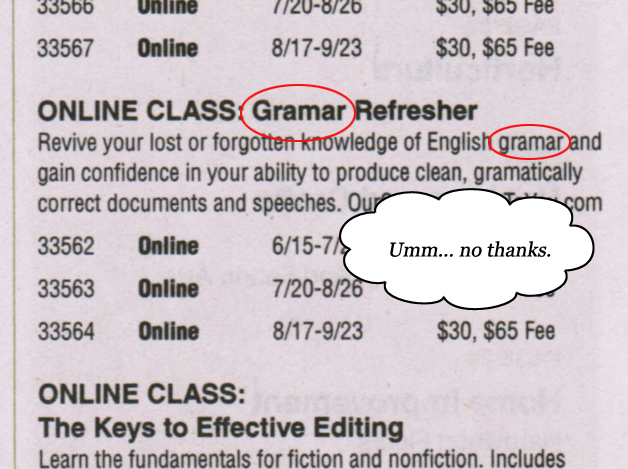
There are two types of grammar check services - human and software-based. When accuracy is required, choose humans to check your writing instead of an algorithmic grammar check. Even the best algorithms are only able to fix a small subset of grammatical errors. Grammar is a contextual science with nuances that cannot be automated.
Here is a simple experiment that shows where software-based grammar checkers fail.
1. He came form the kitchen.
2. He came from the kitchen.
Notice that the difference between both sentences is simply two letters. Software grammar check tools like Microsoft Word fail to find the mistake in the first sentence. (Try it in your version of Word, or watch this video.) Professionals who offer grammar check services for a living will immediately spot the error.
Checking a document's grammar is only the first step to clear writing. The next step is copy editing. For example, let's assume you are writing a horror story. Here are two versions of the same sentence.
Original: He came from the kitchen.
Revised: He slithered quietly into the house from the kitchen.
The revised sentence establishes a more descriptive visual that fits the context – a fictional horror story. The core value of a human editor is in their ability to rephrase your writing where needed to add more clarity. Software grammar checkers simply can't do this.
We all have at least one friend who is a genius with words. English majors worth their words understand the semantics of English but may not know how to copy edit for a specific audience. Copy editing goes beyond basic semantics and proofreading. It requires a synthesis of skill and art. Experience is the best teacher of copy editing. Choose your editor wisely if your writing matters.
Our service employs experienced editors who write for your reader's amygdala. Visit our home page and scroll to the last paragraph to find out what that is and why it is important.